
Hey folks,
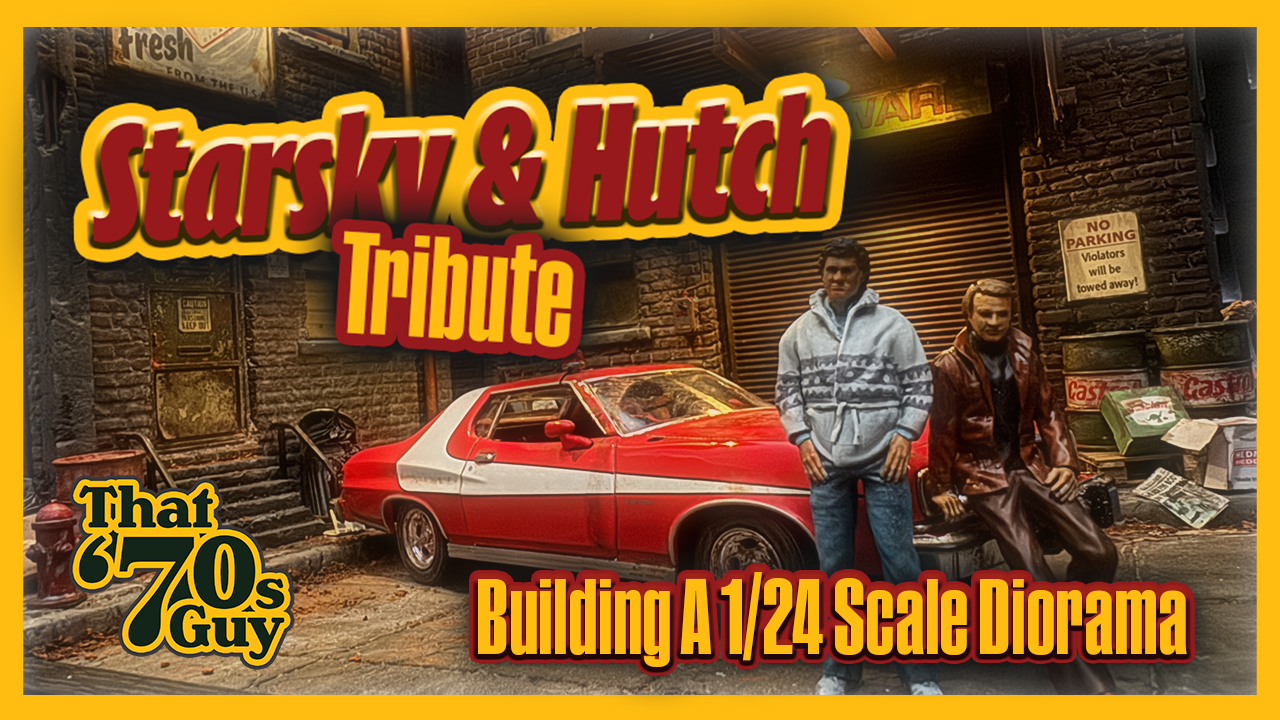
I'm fixin' to drop my Tribute to Starsky & Hutch Diorama real soon — it was one far-out build, and I know you're gonna like it! But dig this: filming it on my GoPros wasn't exactly righteous, man. Got a bunch of fuzzy footage when I was gettin' up close and personal with the build — those little cams just ain't made for tight shots like that.
GoPros are fantastic action cameras — wide-angle, rugged, and super portable. But they use ultra-wide fisheye lenses optimised for capturing full scenes from a distance. When you push one right up against a 1:24 scale diorama, you end up with barrel distortion, poor subject separation, and almost zero background blur (bokeh). Every tiny dust particle on the base becomes equally sharp as your carefully detailed figurine — which is the opposite of what you want.
What we really need for diorama close-ups is something with a longer focal length (50–100mm equivalent), a reasonably fast aperture (f/2.8 or wider), and genuine manual focus control so you can nail that razor-thin focal plane right on the build's most important detail — a figure's face, the headlights of the Gran Torino, or a weathered street sign.
So I'm layin' it out there, people — what kind of budget-friendly camera should I groove with for those close-up shots where the focus is sharp and the background's got that smooth, dreamy blur? Any solid suggestions would be totally outta sight.
Drop a comment on the YouTube video below or hit me up on socials. I'm thinking something in the mirrorless space — maybe a Sony ZV-E10, a used Fujifilm X-T30, or even a Canon M50 with a cheap 35mm prime. But I'm all ears for what the modelling community is actually using on the workbench.
Catch the full Starsky & Hutch diorama build-along on the @that70sguy channel.
Stay cool,
✌️
The Build in Detail
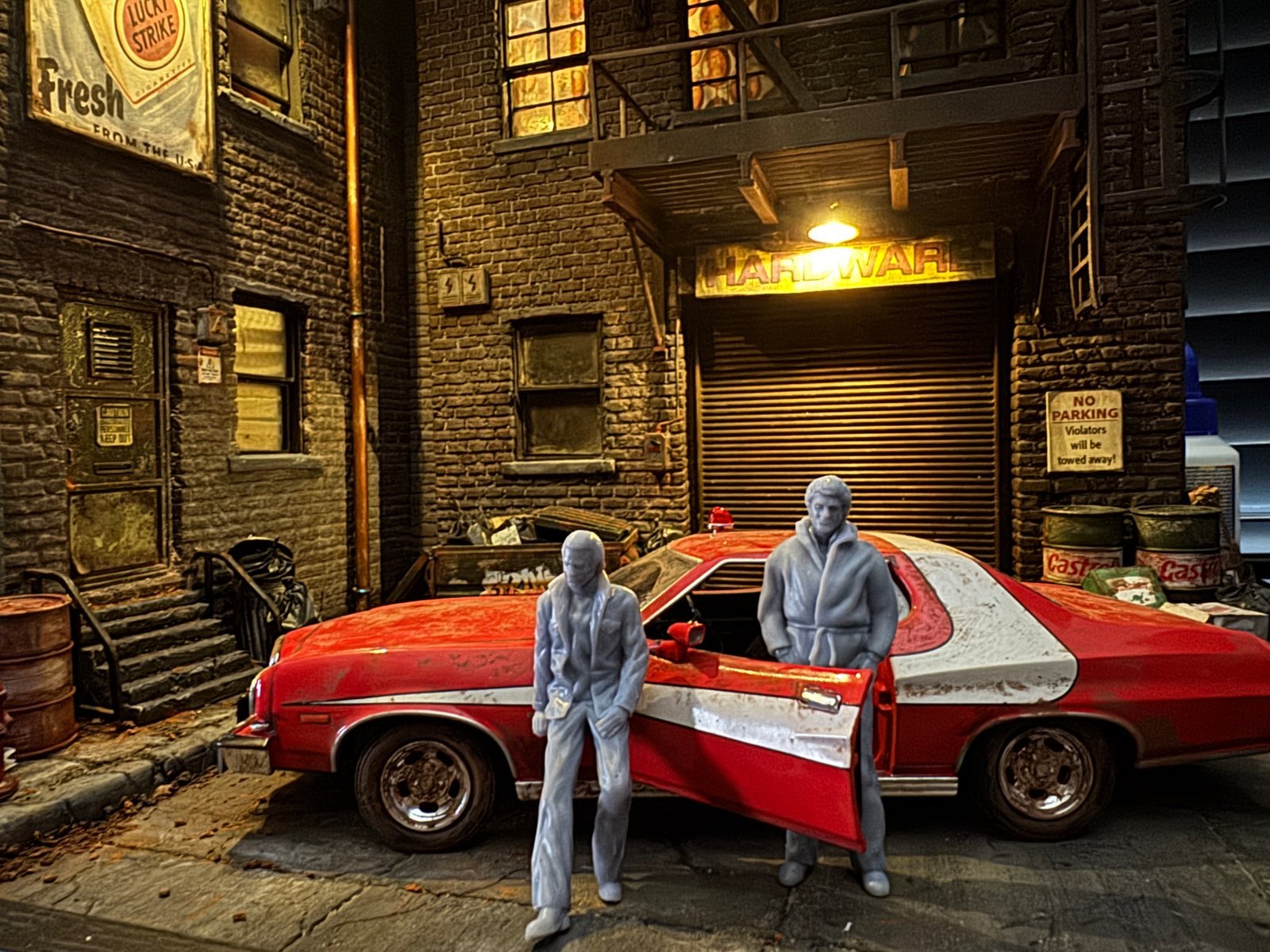
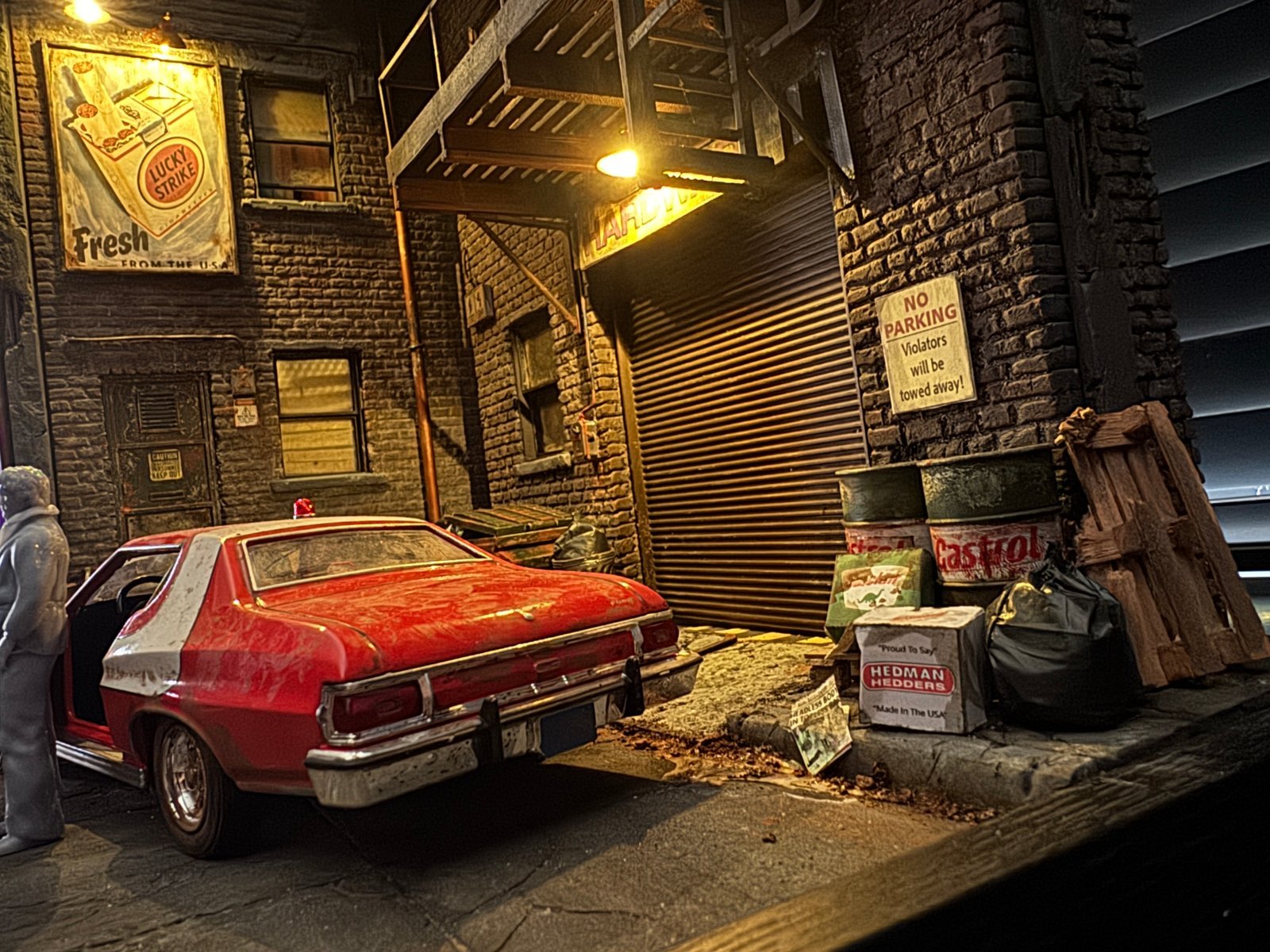
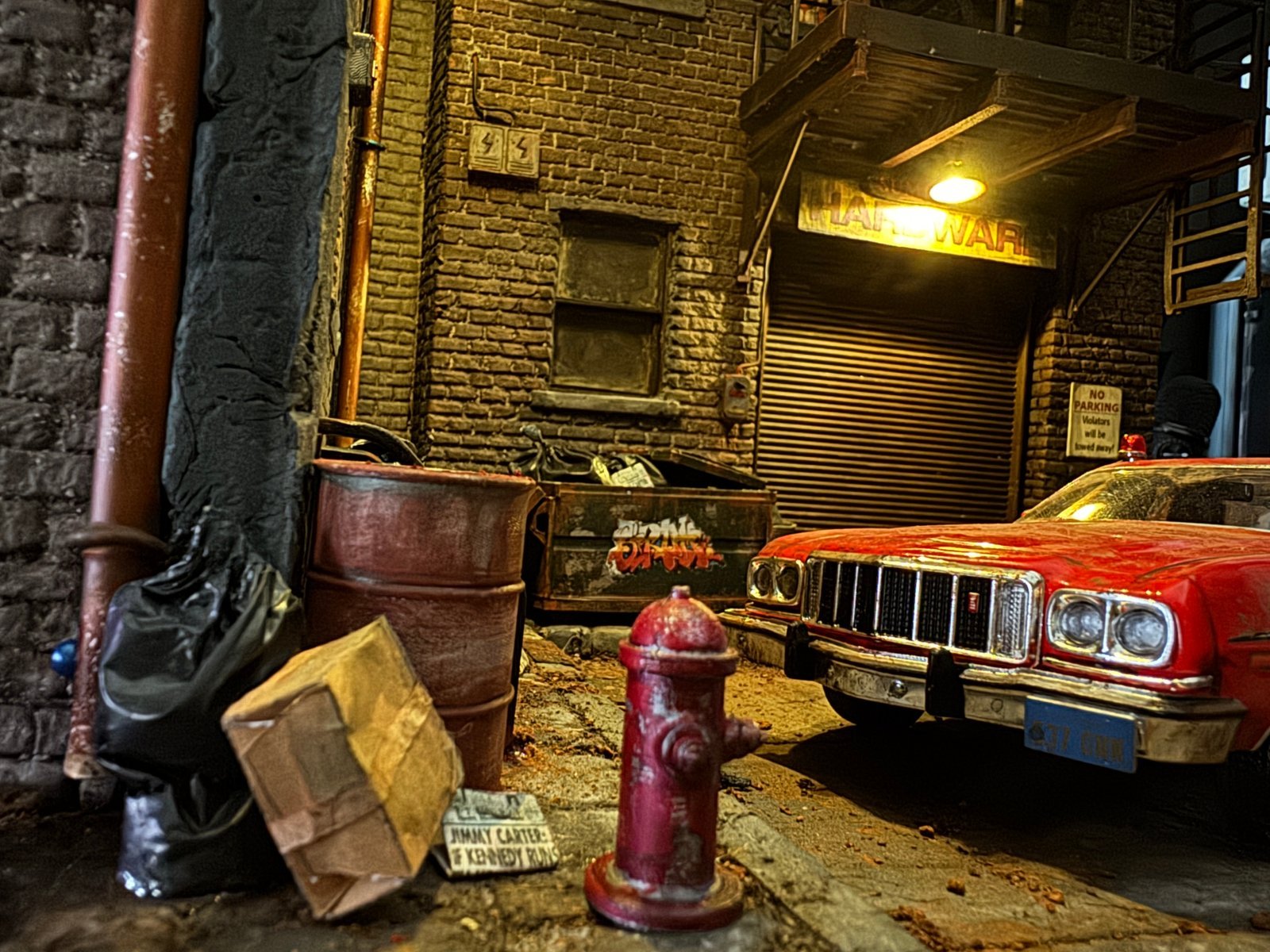
Scroll through the diorama images below — and notice how even a good phone camera starts to struggle with depth of field and sharpness at this scale. Imagine what a proper macro lens would unlock.
Quick Guide: Camera Settings for Scale Model Photography
- Aperturef/4 to f/8 for 1:24 scale. Wider (f/2.8) gives dreamy bokeh but very shallow focus — great for hero shots. Stop down to f/8 for full-scene sharpness.
- Focal Length50–100mm (full-frame equivalent) minimises distortion and gives pleasing compression. A 60mm macro is the sweet spot for tabletop dioramas.
- ISOKeep it as low as possible (ISO 100–400). Use a tripod and remote shutter — even breathing can cause micro-blur at macro distances.
- LightingDaylight-balanced LED panels at 45° angles eliminate harsh shadows. The diorama's own built-in LEDs add atmosphere — balance them with a fill light.
- White BalanceSet manually to avoid the camera shifting between shots. Tungsten (~3200K) matches warm LED strip lighting used in most diorama builds.
Camera Gear for Diorama Close-Ups
Bench-tested picks from the Cameras & Photography aisle.
Sony ZV-E10 Mirrorless Camera
Interchange-lens vlogger camera with a large APS-C sensor — gorgeous background blur for tight diorama close-ups.
Check price on AmazonFujifilm X-T30 Mirrorless Camera
Compact retro body with classic film simulations. A used one is a budget macro powerhouse for the workbench.
Check price on AmazonCanon EOS M50 Mirrorless Camera
Entry-friendly mirrorless with a flip screen — pair it with a cheap 35mm prime for crisp scale model shots.
Check price on Amazon60mm Macro Lens (multi-mount)
The sweet-spot focal length for tabletop dioramas — razor-sharp detail and creamy bokeh at f/2.8.
Check price on AmazonManfrotto Compact Tripod
Rock-steady support for long macro exposures. Even breathing causes micro-blur at close range.
Check price on AmazonNeewer Bi-Color LED Light Panels (2-pack)
Daylight-balanced continuous lighting at 45° angles kills harsh shadows on small subjects.
Check price on AmazonAs an Amazon Associate I earn from qualifying purchases. Links below are affiliate links — at no extra cost to you, I earn a small commission that helps fund the builds you see on the channel.